18 October 2026
What Affects Gutter Installation Cost Factors for Homeowners in Leesburg, Florida
Presented by @gutterguardguide417
If you own a home in Leesburg, you already know water moves fast here. Summer thunderstorms can dump a lot of rain in a short stretch. Tropical systems can turn a normal yard into a drainage problem by dinner. Add high humidity, long growing seasons, and the leaf litter that seems to show up exactly where you do not want it, and gutters stop being a cosmetic add-on. They become part of how your house sheds water and protects the ground around it.
That is why gutter installation cost factors Florida homeowners ask about rarely come down to one simple number. The price is tied to what the gutters need to accomplish on your property. In this part of the state, the biggest driver is usually not the metal itself. It is the drainage plan.
A basic system that simply catches roof runoff is one thing. A system designed to move water away from the foundation, keep runoff on site where possible, protect planting beds, and avoid messy overflow near lanais or pool areas is another. Those details matter in Leesburg, and they tend to shape both installation scope and long-term value.
Why drainage design matters more in Florida than many homeowners expect
A lot of people think of gutters as a roof accessory. In practice, they are part of stormwater management. Florida guidance consistently emphasizes directing downspouts away from the home and into areas that can absorb water, such as lawn, planting beds, rain gardens, or other pervious spaces. That approach helps reduce runoff and erosion, and it can also cut down on the nuisance issues that show up when water collects too close to the house.
That matters in real life. When downspouts dump in the wrong place, you can end up with bare soil, splashing against siding, muddy beds, or water pooling where people walk. In humid conditions, standing water around the foundation can also invite pest activity. Homeowners often call about gutters after they notice staining, washout in the mulch, or a soggy strip of lawn that never seems to dry.
So when you ask what affects cost, start there. The installer is not just hanging a channel at the roof edge. They are solving a water movement problem.
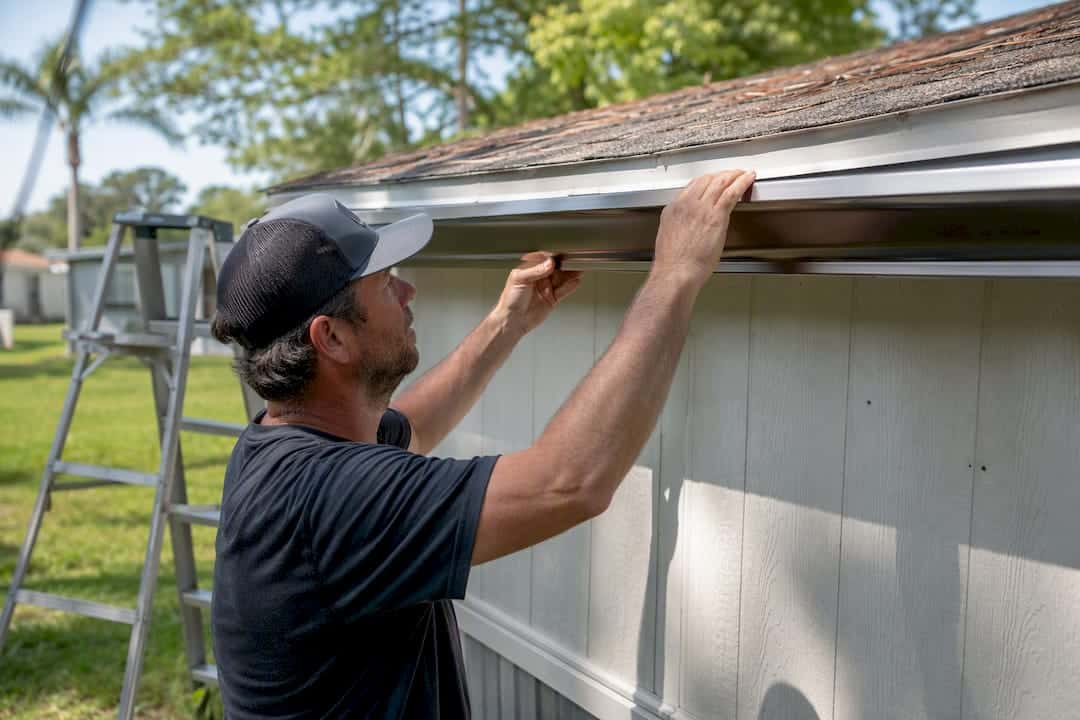
A home that can send runoff straight into a healthy lawn area may need a simpler layout. A home with tight side yards, hard surfaces, decorative beds, or a screened enclosure often needs more planning so the downspouts discharge where water can soak in rather than create a new mess.
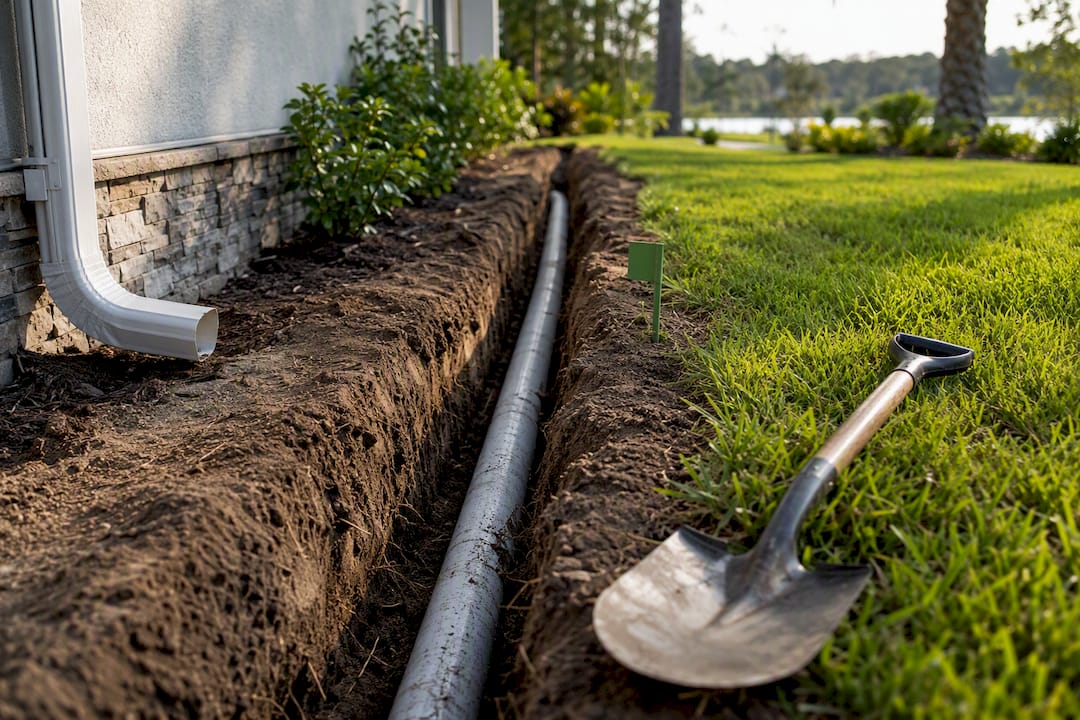
The biggest cost factor is often where the water ends up
I have found that many homeowners focus on the visible portion of the gutter and overlook the less glamorous but more important question: where does the downspout empty? In Florida, that choice affects performance and often affects the installation price.
If the goal is to keep roof runoff on site, the downspouts may need to be aimed toward turf, planted areas, a rain barrel, or another pervious location. That can mean a straightforward drop in one yard and a much more thought-out route in another. Even two houses on the same street can have very different needs depending on grading, hardscape, landscaping, and where outdoor living spaces sit in relation to the roofline.
This is one reason estimates can vary so much. One proposal may reflect only the gutter sections themselves. Another may include a fuller drainage strategy that better fits Florida-friendly runoff control. On paper, the second bid can look higher. In practice, it may be solving the real problem.
For homeowners comparing estimates, this is where a little patience pays off. Ask each company to explain not only how they will collect water, but how they plan to release it. If that answer is vague, the quote may be leaving out the part that matters most.
Pool cages and outdoor living areas change the conversation
Homes with screened pool enclosures, lanais, and extended outdoor spaces often need more careful planning. Gutter drainage for pool cages is not just about keeping rain off the deck. It is about avoiding erosion, splashback, and awkward discharge points around areas people actually use.
Florida guidance around outdoor living landscapes notes that roof runoff and drainage should be managed carefully so water does not erode soil or create messy overflow near those spaces. That sounds obvious, but it gets missed all the time. A downspout that would be acceptable in an open side yard can be a constant annoyance beside a pool enclosure or patio, especially during storm season.
That extra planning can affect installation cost because the layout has to respect how the property functions day to day. Homeowners usually want the same thing: no waterfall over the entry, no muddy corner by the cage, and no runoff chewing through the edge of the planting bed. Getting there may require a more tailored downspout placement strategy than a simple perimeter installation.
Maintenance expectations shape value, and sometimes price
Florida homeowners often ask whether they should be budgeting only for installation or also for upkeep. The honest answer is both. Gutters and downspouts require maintenance. Leaf litter and debris contribute to drainage problems, and Florida conditions do not give neglected systems much grace.
That matters to cost in two ways. First, some homeowners choose upgrades because they want to reduce how often the system clogs or how often they need to get on a ladder. Second, a well-maintained system is less likely to need correction later because water backed up and spilled in the wrong place for months.
This is where conversations about gutter guards Mount Dora FL, gutter cleaning Dunnellon FL, and gutter repair Hawthorne FL usually come up in search results and contractor discussions. Even if you are in Leesburg, those terms reflect the same practical concern across Central and North Florida: once gutters are installed, somebody has to keep them working.
I would not treat maintenance as an afterthought. A lower upfront quote can lose its appeal quickly if the drainage setup is hard to keep clear or if small repairs are likely to be ignored because the system is inconvenient to reach and clean.
DIY gutter cleaning or hire a pro is partly a cost question, but not only a cost question
This topic deserves a plain answer. DIY gutter cleaning or hire a pro is not just about who can do it cheaper on a Saturday morning. It is also about how comfortable you are with ladder work, roof edges, wet debris, and spotting early signs of trouble.
Some homeowners are fully capable of routine cleaning. Others would rather pay for the work and have someone experienced notice loose sections, improper flow, or clogged outlets before the next heavy rain. In Florida, where a routine summer storm can stress the system fast, missed maintenance tends to show https://gutternotes253.rivetgarden.com/posts/how-gutter-guards-handle-oak-leaves-and-acorns-in-reddick up at the worst time.
The right choice depends on the house and the homeowner. What should not happen is pretending maintenance is optional. It is not. If leaves, seed pods, or roof grit collect in the channel, water has fewer places to go. Then it spills over, often close to the foundation or across the landscaping you were trying to protect in the first place.
Gutter guards can change the math, but they do not erase maintenance
Homeowners looking at installation proposals often ask whether guards are worth adding from day one. That is a fair question, and the answer depends on what problem you are trying to solve.
If your biggest frustration is recurring debris buildup, discussing guards during the initial installation may make sense. If your property has relatively low debris pressure and easy access for cleaning, you may decide to keep the system simpler. Either way, it helps to avoid magical thinking. Guards may change how debris behaves, but they do not make a gutter system maintenance-free.
That is one of the more persistent gutter myths Florida homeowners run into. Another is the idea that once gutters are up, any downspout location is fine as long as water is leaving the roof edge. Florida-friendly runoff guidance says otherwise. Where the water goes matters just as much as the fact that it leaves the roof.
Seamless systems, style choices, and why quotes can differ
When homeowners start comparing products, terms like seamless gutters Williston FL and standard sectional systems tend to appear in marketing and estimates. The key thing to understand is that product choice can influence price, but the best value still depends on whether the system supports the runoff plan your home needs.
It is easy to get distracted by labels. A better approach is to ask how the proposed system will handle your roof runoff, where the downspouts will discharge, and how the setup fits your yard and hardscape. A prettier or more heavily promoted option is not automatically the better investment if the discharge points are poorly thought out.
For some homeowners, appearance matters a great deal, especially on front elevations. That is reasonable. Gutters are visible, and they can either blend with the house or stand out awkwardly. Which brings us to another cost factor that gets overlooked.
Color choices and HOA rules can affect your project timeline and budget
Gutter colors for Florida homes are not only a design decision. In many communities, they are also an approval issue. Florida HOA law allows associations to set exterior appearance standards, including color and style specifications for certain exterior products, as long as those standards comply with the building code and are not used to deny installations that otherwise conform.
For a homeowner, that means two practical things. First, if you live in an HOA community, verify whether color and style approval is needed before the work is ordered. Second, do not assume the contractor will handle that step unless it is clearly part of the agreement.
A delay in approval can affect scheduling. A required change in color or style can alter the order and, depending on the product line available, possibly the project cost. Even when the budget impact is small, the time impact can be frustrating. The safest move is to sort that out early.
I have seen homeowners spend a lot of energy comparing install proposals while forgetting to check association standards until the last minute. It is not dramatic, but it is expensive in the slow, annoying way that home projects often are.
Metal roofs bring their own questions
Searches for gutters for metal roofs Florida are common, and the reason is simple: homeowners want to know whether the gutter plan needs special attention when the roof material changes. The safest, most grounded way to think about it is this: whatever the roof type, the essential question remains how rainwater is being collected and where it is being directed.
If you have a metal roof, ask the installer to explain the runoff path in plain language. The details of attachment and compatibility should be discussed with the contractor, but the homeowner’s side of the decision still centers on drainage outcomes. Will water be moved away from the home? Will it be directed into turf, beds, or another pervious area where practical? Will the discharge create erosion near a walkway, pool screen, or planting area?
Those are useful questions no matter what sits on top of the house.
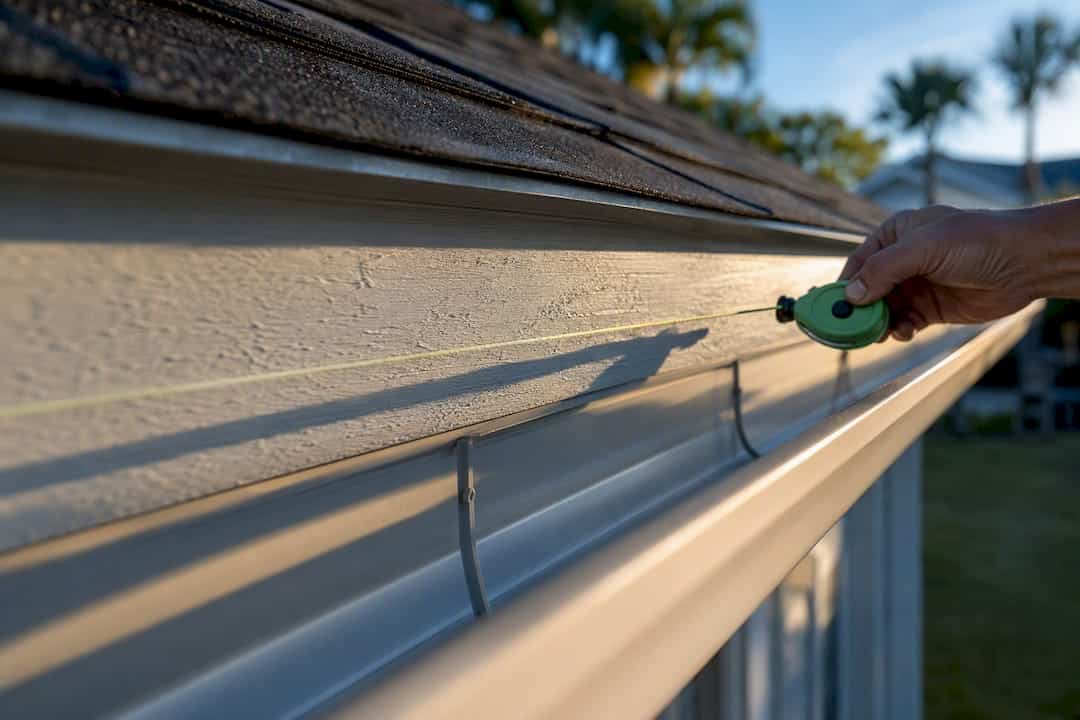
The cheapest system can become the expensive one
This is the part many people learn after the fact. A low quote can look attractive until the first hard rainy stretch shows you what was left out. If the system dumps too close to the foundation, scours out mulch, creates puddling, or overflows because maintenance was not considered, the installation did not really solve the problem.
That does not mean the highest quote is automatically justified. It means the proposal should match the property. In Leesburg, a sensible estimate usually shows evidence that the contractor thought about stormwater, not just the linear footage at the eaves.
Here are five questions worth asking before you sign anything:
- Where will each downspout discharge, and will that water flow into a pervious area such as turf or planting beds where practical?
- How will the plan avoid pooling near the foundation or creating erosion in landscaped areas?
- If the home has a pool cage, lanai, or patio, how will runoff be managed around those spaces?
- What maintenance will the system still need, and how often should it be checked after heavy rain periods?
- If the house is in an HOA, who is responsible for confirming color and style approval before installation?
Those questions will tell you more than a flashy brochure.
Florida homeowners should separate myths from useful expectations
A few myths show up again and again in these conversations. One is that gutters are optional in rainy climates because the ground will absorb whatever comes off the roof. Sometimes the ground does absorb it. Sometimes it does not, especially when runoff is concentrated in the wrong place during heavy storms.
Another myth is that a gutter system’s only job is to keep water from pouring off the roof edge. In Florida, the larger purpose is controlling where that water goes so it does not damage soil, landscaping, or the area around the house.
A third myth is that installation ends the work. It does not. Maintenance remains part of ownership, whether you do it yourself or hire out cleaning and occasional repair.
A sensible year-round approach for Leesburg homes
The smartest homeowners I know treat gutters the way they treat irrigation or air conditioning. They do not obsess over them every day, but they pay attention often enough to catch problems early.
A practical year-round gutter checklist Florida homeowners can follow looks like this:
- Check after major summer storms to make sure water is flowing through downspouts and not spilling over the sides.
- Clear leaf litter and debris before it builds up enough to block drainage.
- Watch the ground below downspouts for erosion, standing water, or splash patterns that suggest discharge needs adjustment.
- Inspect areas near the foundation and along planting beds for signs that runoff is landing too close to the house.
- Revisit gutter color or exterior changes with the HOA before replacing visible components in a community with appearance standards.
That is not glamorous maintenance, but it is effective.
What a well-planned installation really buys you
A good gutter installation is not only about neat lines along the roof. It buys control. It gives roof runoff a predictable path. It helps protect the foundation area from repeated soaking. It keeps planting beds from being hammered by concentrated discharge. It supports the broader Florida-friendly goal of keeping water on site in places that can absorb it rather than sending it where it will cause trouble.
For Leesburg homeowners, that is the heart of the cost conversation. The final number is shaped by how much planning your property needs to manage water well. A house with easy discharge into turf may be relatively straightforward. A home with tight drainage options, a pool enclosure, HOA appearance rules, or persistent debris issues may need a more deliberate setup and a more realistic budget.
If you keep that perspective, comparing quotes gets easier. Instead of asking only, “How much do gutters cost?” you start asking the better question: “What am I paying this system to do?” On a Florida home, that answer should always include controlled runoff, sensible downspout placement, and a maintenance plan you will actually follow.